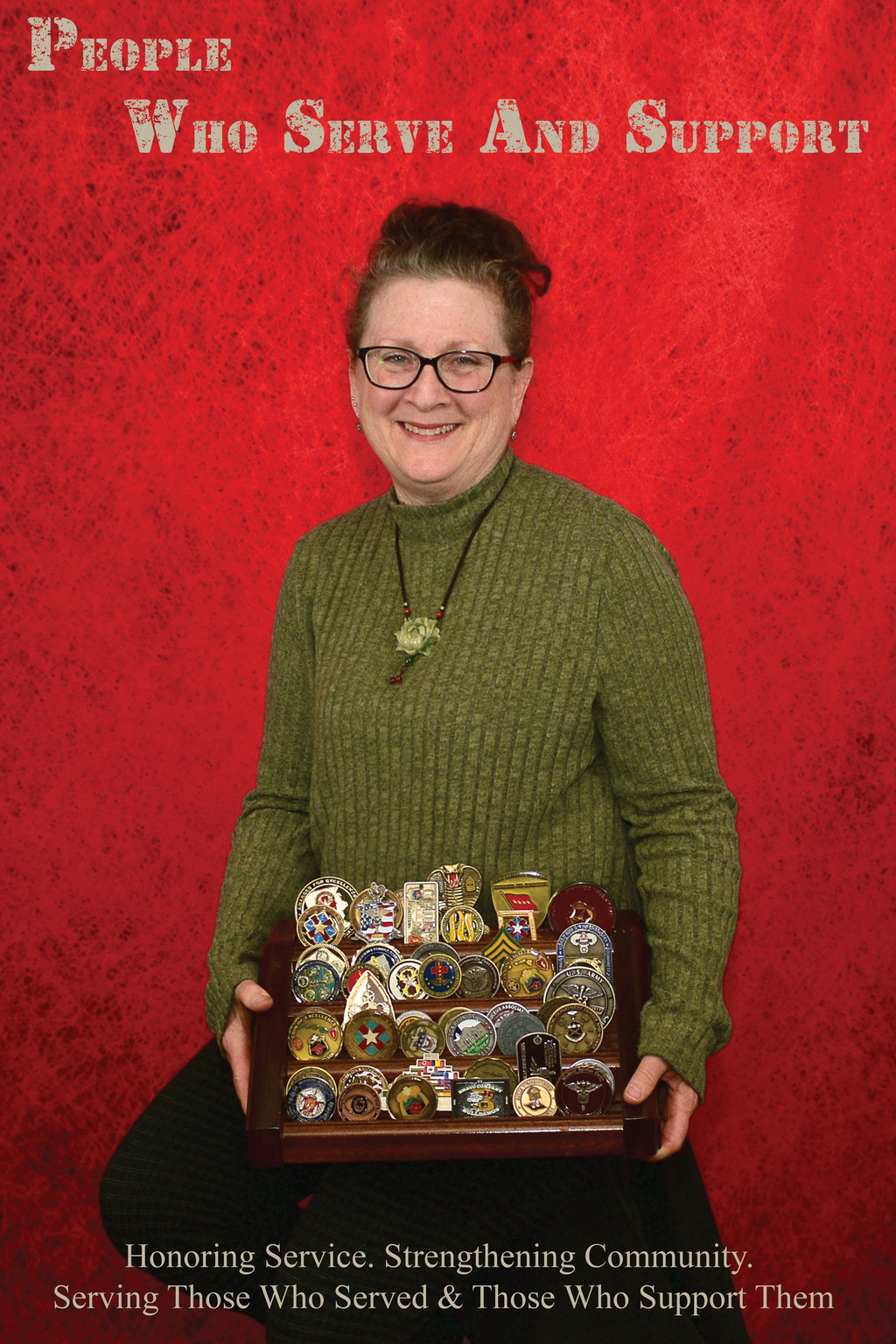
U.S. Army Veteran | Faculty & Alumna | Pacific University
#WomenWhoServeAndSupport | #StudentsWhoServeAndSupport | #CommunityWhoServeAndSupport
Honoring Service. Strengthening Community.
Serving Those Who Served—and Those Who Support Them
Looking back, Carol realizes she spent half of her life serving in the United States Army. Immersion in an organization for that length of time shapes a person in ways that are difficult to anticipate. Her military career began almost by surprise while she was an optometry student at Pacific University. The Army reactivated its Health Professions Scholarship Program at the end of a fiscal cycle, and the decision process moved quickly. She was offered a scholarship package covering her final three years of school, along with the guarantee of employment after graduation—serving her country.
That initial service was the “payback” for the scholarship. She entered the Army Medical Department as an Optometry Officer at a time when the field was understaffed. What began as a three-year obligation quickly became something more. She found fulfillment caring for service members and their families and chose to remain beyond her required commitment. From the beginning, military life was a shared family decision. She and her partner (now husband) approached each commitment together, with a guiding principle: if it ever stopped being meaningful or fulfilling, they would reassess. That intentional reevaluation became part of their rhythm, especially with each PCS move and new assignment.
Over the course of her career, Carol rose to the rank of Colonel—the first female to do so in the Army Optometry Officer Corps. That moment validated the sacrifices, mentorship, perseverance, and leadership she had demonstrated. She was acutely aware of the quiet pressure of breaking that barrier and the responsibility she carried for the women who would follow. Success, for her, was not individual—it was collective.
Her military career strengthened her leadership, expanded her global perspective, and connected her to lifelong mentors and colleagues. It made her agile, comfortable with uncertainty, and willing to take on demanding assignments. It also reinforced a deep belief in service as a mindset: noticing where there is need and stepping in with humility and purpose.
When she retired in 2019, the desire to serve did not diminish. She returned to Pacific University—this time as faculty—to share her knowledge and shape the next generation of optometric physicians. Through teaching, mentoring, and community outreach addressing gaps in care and access to vision services, she continues her commitment to service.
Her advice reflects decades of lived experience: take advantage of opportunities, stay flexible, seek mentors (more than one), and be willing to grow through discomfort. Many of the most life-changing moments, she notes, were unexpected.
Carol’s journey reflects sustained leadership, gratitude, humility, and a life shaped by purposeful service.
Quote: